8/29/2025
Woodworking 101 - Part 2 - Let's go shopping: protective gear
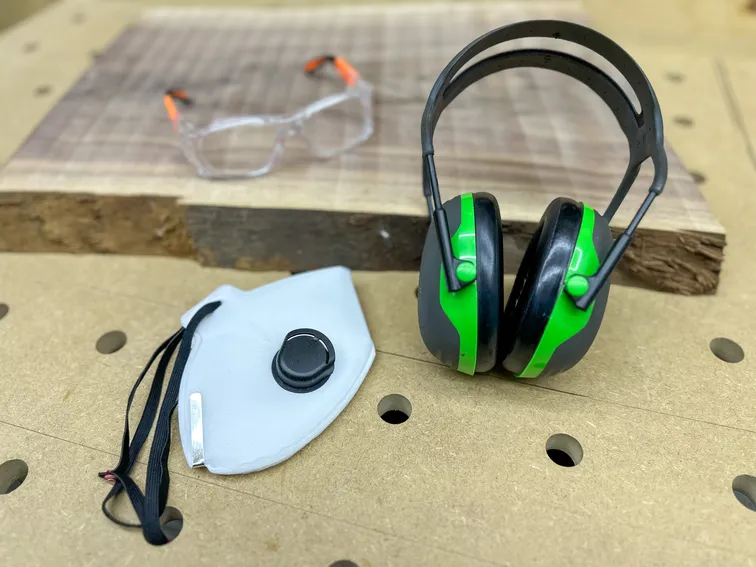
Image by:
hashtagsheepIn the first installment of this series, we talked all about choosing a battery platform. While you’re weighing your options and doing the research, we can already get started with protective gear and workshop essentials. The next parts of the series will walk you through building a solid starter kit, assuming you’ve decided that woodworking isn’t just a one-off project, but something you want to dive into properly.
Let’s be honest: protective gear doesn’t get the same buzz as a shiny new saw or router, but it absolutely deserves your attention. I’ve already had a few minor accidents… nothing serious, thankfully, but they could’ve been a lot worse without the right protection. And I consider myself a pretty careful person! So as always: safety first.
Note: Prices here are rough estimates in EUR/USD based on typical online or store listings. They’ll vary depending on your country and local market, but it should give you a general idea.
Eye protection
You can grab safety goggles at most construction or hardware stores. There are lots of types out there, but I recommend the ones that look like sporty sunglasses: lightweight, comfortable, reasonably priced (around 10-15 EUR/USD), and they do the job well. Here’s an example from Milwaukee if you want to see what those look like.
The “diving goggle” style, like the 3M™ 4700 Series, is another option (around 5-10 EUR/USD). These goggles are fully enclosed with a clear, flat lens and soft rubber edging, and could fit over prescription (was the case for me). They’re ok for a while, but they can get uncomfortable over time and tend to fog up without anti-fog coatings or good airflow.
A better solution is safety glasses with built-in prescription lenses. These are often available in a range of common strengths (like reading glasses) and are much more affordable than full custom options (usually around 30-50 EUR/USD). The downside: if you have different strengths for each eye, need astigmatism correction, or use progressive lenses, they might not work for you.
In my case, I ended up going with custom prescription safety glasses from an optician. They weren’t cheap (mine came in at around 200 EUR/USD, though prices vary widely), but they’re incredibly comfortable and offer full protection without compromise.
Some clip-on shields exist that can go over regular glasses, but I haven’t found any I’d truly recommend.
Respiratory protection
Let me start with a warning: don’t underestimate wood dust. Even small amounts of dust can linger in your lungs and pose serious long-term health risks. Growing evidence from recent studies has directly contributed to stricter EU safety regulations.
For light hobby work, a simple pack of certified disposable masks is a good start. Make sure the mask has a proper safety rating, and take a moment to check what standards apply in your country. Every region uses slightly different classifications, so it’s worth informing yourself. You’ll find them often in 3-pack (around 10-20 EUR/USD), and they’re usually good for multiple uses as long as they stay clean and dry. A good example would be the 3M™ Aura™ 9300+ Series, which offers basic protection and includes a valve to help with air flow.
If you want more comfort or plan to use them regularly, look for a fabric-style mask (around 25-50 EUR/USD). These are more comfortable to wear for extended periods, and many models offer washable fabric and replaceable filters. They would be my suggestion for beginners as well, since they’re one of the easiest and most pleasant ways to stay protected in the workshop. A widely available example is from Base Camp. Just make sure the ratings match your intended use, some models are designed for sports or urban air pollution and aren’t suitable for fine woodworking dust.
From there, you can go full nerd and get a proper respirator with replaceable filters. I use one from Sundström. Prices can vary greatly depending on the type and intended use, but they offer the best protection overall. Many models feature modular systems with upgradable or replaceable filters, making them a versatile long-term solution for both dust and fumes from painting or gluing.
Hearing protection
Machines are loud. Even short bursts of noise can cause long-term hearing damage, so wearing protection is crucial. You can pick up basic over‑ear defenders (around 15-20 EUR/USD) like the 3M™ Peltor™ X1, or opt for in-ear versions (around 10-30 EUR/USD) like the 3M™ E-A-R™.
Want Bluetooth or built-in radio? That’s an option too, though a bit more expensive. Just keep in mind, as a beginner, it’s better to avoid distractions like music or phone calls while using power tools. Staying fully focused is a safety feature in itself.
Choose something comfortable, you’ll be wearing them a lot. And yes, they look cool. Because nothing says “serious maker” like big earmuffs and a fancy drill.
Gloves
Gloves are a bit controversial in woodworking. Safety authorities around the world recommend not wearing gloves when operating machines with exposed rotating parts, such as table saws, jointers, planers, lathes, or drill presses, because gloves can get caught and pull your hand into the machine. That’s a serious risk and one of the most common causes of hand injuries in workshops.
For everything else, though, gloves are a good idea. They protect against splinters, scrapes, minor cuts, and chemical exposure, and they improve your grip when handling heavy or rough material. You’ll want to wear them when carrying lumber or sheet goods, doing hand sanding or other manual finishing work, applying finishes or solvents (with chemical-resistant gloves), setting up tools or changing blades (while powered off), and during outdoor or construction-style woodworking like building fences or decking.
Choose snug-fitting gloves with rubber-coated palms and fingers for most general tasks. These offer good grip and flexibility, and are available at most construction stores (around 5 EUR/USD). Tool brands like Milwaukee offer great options with added durability and comfort. Replace these gloves when they start to wear out or tear, since damaged gloves can reduce protection or become a safety risk.
For messy or chemical work, disposable nitrile or latex gloves are a good option (around 15 EUR/USD a box). They’re widely available, from pharmacies to construction stores to general home supply shops, and provide solid protection for short, dirty tasks like glue-ups, staining, or handling solvents.
Footwear
This one caught me off guard… literally. I thought proper shoes were just for big construction sites. Wrong. Even something like lowering a sheet of plywood can be painful if it lands on your toes the wrong way.
What you want: solid footing, good friction, and some kind of toe protection. Skip the flip-flops. You don’t need heavy-duty boots, but basic safety shoes with a plastic or steel cap can be found everywhere (for 30-50 EUR/USD).
Clothing
No fashion tips here. Go for natural fibers over plastic-based materials, they’re more breathable and don’t melt or react as badly when hit by flying sparks or other hot stuff. Just grab some old jeans or cotton pants and a comfy hoodie or sweater and avoid anything loose or dangly: drawstrings, long necklaces, etc.
You can safely wear short sleeves in the workshop, especially when using machines with exposed moving parts, where tight or short sleeves are actually safer than loose long ones. Personally, I prefer long tight sleeves and pants to keep wood chips and dust off my skin, but that’s a personal choice. Bonus points if your clothes have pockets for clips or small tools.
One more thing about safety
You’ve probably heard the saying: “measure twice, cut once”. Well, that applies to safety too.
Before turning on any machine, make sure everything’s secure. Do a dry run with the power off. Know where your hands are. Double-check your setup. It might feel slow at first, but it becomes second nature, and it’s how you keep all ten fingers.
Up next
In the next post, we’ll finally step into the workshop and talk gear, specifically, the stuff you’ll reach for in every project. From measuring tools to clamps and a good work surface, “Let’s go shopping: workshop essentials” will walk you through everything you need to get started.
Until then, stay safe and keep your fingers attached!
Explore the series:
- Woodworking 101 - Part 1 - Getting powered up
- Woodworking 101 - Part 2 - Let's go shopping: protective gear
- Woodworking 101 - Part 3 - Let's go shopping: workshop essentials
- Woodworking 101 - Part 4 - Let's go shopping: power tools
- Woodworking 101 - Part 5 - Let's talk wood: materials you'll meet
I hope you enjoyed the read, and if not, that's fine too! Feel free to share your thoughts or reach out on Instagram, Mastodon, Bluesky or MakerWorld. I'm always happy to hear feedback: good, bad, or sheep-themed.