7/16/2025
Woodworking 101 - Part 1 - Getting powered up
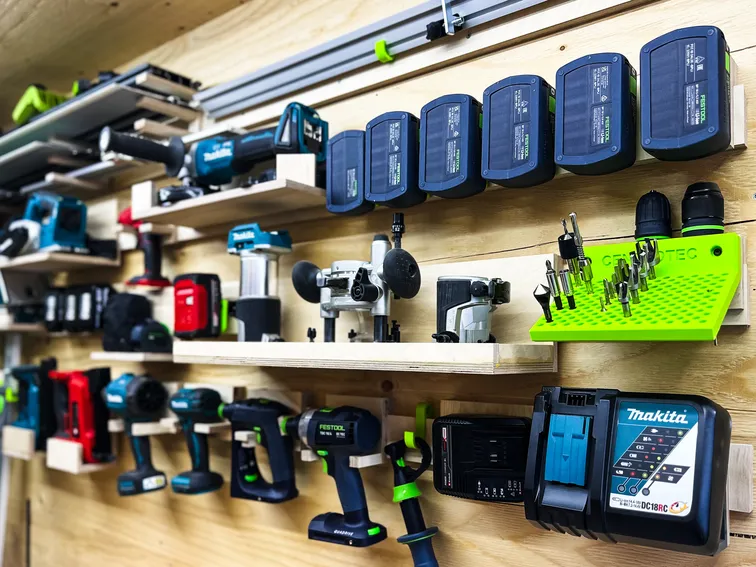
Image by:
hashtagsheepLike every woodworking content creator, I also need one of those advice series where I explain what you should do when getting into woodworking. If you’re already bored by that topic, I understand, and I won’t be mad if you stop reading.
While I’ll share some basic pointers on how to get started with your new hobby, I want to focus more on the things I learned when starting out that I wish I had heard from the sources I used back then.
This first part addresses the elephant in the room: the power tools, especially battery platforms. Cordless hand tools have become so good that I wouldn’t recommend any corded version anymore (with a few exceptions that aren’t relevant for beginners). Corded tools are still cheaper and get the job done, but you trade in a lot of comfort and ease of use. Most of my corded tools are leftovers from before I had a solid battery platform.
So let’s dive into the decision-making process:
12V, 18V, or 40V?
From my perspective, the answer is simple: 18V.
I personally started on a 12V platform because I liked the idea of smaller, lighter tools, since I’m not the average build and have relatively small hands. Most tool ergonomics are designed for bigger, stronger types (shoutout to the industry: your customers are diverse).
While 12V tools were fun at first, I started to regret the choice. The power was fine for softwoods and quick shelf builds, but thicker MDF already pushed it. The real issue, though, was the limited range of tools. Compared to 18V, the selection just couldn’t keep up, even as the years passed.
As for 40V: that’s for professionals with heavy-duty needs. If you ever need that kind of power, you can always go corded. For most of us, the cost and weight of 40V isn’t worth it.
Team red, green, blue… and all the other colors?
Here’s where things get interesting… and where you’ll want to look beyond just the brand logos.
The universal tip every woodworker will give: look at the range of tools offered on a platform. Most brands now cover everything from woodworking to gardening to jobsite espresso makers. Some even share batteries across different companies. Bosch DIY (Green) is a good example with the Power for All Alliance, which includes Gardena, Husqvarna, and others.
Even bigger tools like table saws, dust extractors, you name it, are now cordless. You’ll probably want some of those eventually.
The hidden problem: availability
One thing I really wish someone had told me: local availability matters. If you’re lucky and live in a big market targeted by all manufacturers, you can skip this. But if you’re like me (moving from one of the largest markets in the EU to one of the smallest) it becomes a real issue. Sure, you can order from anywhere online, but I like supporting local stores (especially the independent ones), and I want parts or replacements fast when something breaks.
And that brings me to service. Good service is worth more than flashy specs. There’s nothing worse than sending a tool away for a month only to hear it’s cheaper to buy a new one. Check if your local store has service agreements with your chosen brand.
Another reason I shop locally: I start a lot of projects on impulse (don’t we all?), and sometimes those ideas need a new tool. I don’t want to wait a week for shipping. It also helps to have easy access to accessories. No project gets delayed faster than realizing you don’t have the right blade or bit.
Spending vs quality: my take
I like to think of it in four tiers: regrettable, reliable, refined, and rock-solid.
In the regrettable tier, you’ll typically find in-house brands from hardware stores and retail chains, as well as off-brand knockoffs and cheap imports. Some are decent, some are best avoided, and you won’t know until it’s too late. That’s the harsh truth: buying from these brands is often a gamble. And if you start investing deeper into their ecosystem, you might find yourself regretting it later. Lesson learned: buy cheap, buy twice.
If your budget is tight or you just want to test the waters, go for the reliable tier. Brands like Ryobi and Einhell offer a surprising amount of quality and a broad tool lineup. They’re a great way to get started without burning through your wallet.
Next up is refined. Examples which fit here are Makita and Bosch Professional. They might not always blow the entry-level stuff away in raw power, but they’re more repairable, often more precise, and trusted by both hobbyists and pros. You’ll be happy here for a long time.
And if you want the shiny stuff, welcome to the rock-solid tier: Festool and Milwaukee. These brands lead in innovation, build quality, and clever engineering. They’re not cheap, but usually worth it.
Of course, there are many other brands out there, this list just reflects the ones I’m personally aware of, have tested myself, or looked into through reviews. Brands like Metabo HPT / Hitachi, Ridgid, and others might be great too, and could well find a place in my tiers once I’ve had more hands-on experience with them.
Where I landed
After all that info, here’s what I landed on based on a lot of research, trial and error, and figuring out what actually suits my needs:
- Festool 18V - These tools just work. Setup is fast, everything fits together, and the accessory game is strong. I might be a bit biased because I’m a fan, but once you start looking into it, you’ll notice other creators often say the same.
- Makita 18V - Great selection, solid quality, and excellent availability here in Sweden.
- Einhell 18V - Perfect for tools that don’t need to be premium, like glue guns or staplers. Also, they fill gaps other brands don’t.
As you can see, I actually run three battery platforms, which I wouldn’t recommend for beginners, but it works for me. With these, I’ve got nearly everything covered.
Wrapping up
Before you now dive into research and reviews, just remember this: Don’t overthink it. Every platform I mentioned will get the job done, some just have more polish or clever solutions. What really makes the difference is you. Skills and experience will always matter more than tool branding.
Also: check the second-hand market. Great deals are out there, and it’s a low-risk way to start.
And finally, whatever you buy, make sure you learn the basics of safety. Power tools are fun, but they’ve got bite.
In part two, Let’s go shopping, I’ll go over the workshop gear I’d recommend buying when starting out: what you really need, what can wait, and what’s just nice to have in your setup.
Explore the series:
- Woodworking 101 - Part 1 - Getting powered up
- Woodworking 101 - Part 2 - Let's go shopping: protective gear
- Woodworking 101 - Part 3 - Let's go shopping: workshop essentials
- Woodworking 101 - Part 4 - Let's go shopping: power tools
- Woodworking 101 - Part 5 - Let's talk wood: materials you'll meet
I hope you enjoyed the read, and if not, that's fine too! Feel free to share your thoughts or reach out on Instagram, Mastodon, Bluesky or MakerWorld. I'm always happy to hear feedback: good, bad, or sheep-themed.